

STRATEGIC GOALS
- Secure CCB legislative authorization and/or expansion in at least two more states by the end of 2026.
- Grow the number of CCB programs by 30 percent by 2028, from 696 to 905.
- Strengthen CCBA’s position and visibility as the leading organization for CCBs as measured by an increase in membership, calls for presentations, and the number of publications (need to identify benchmark and “to” goal number by 2028).
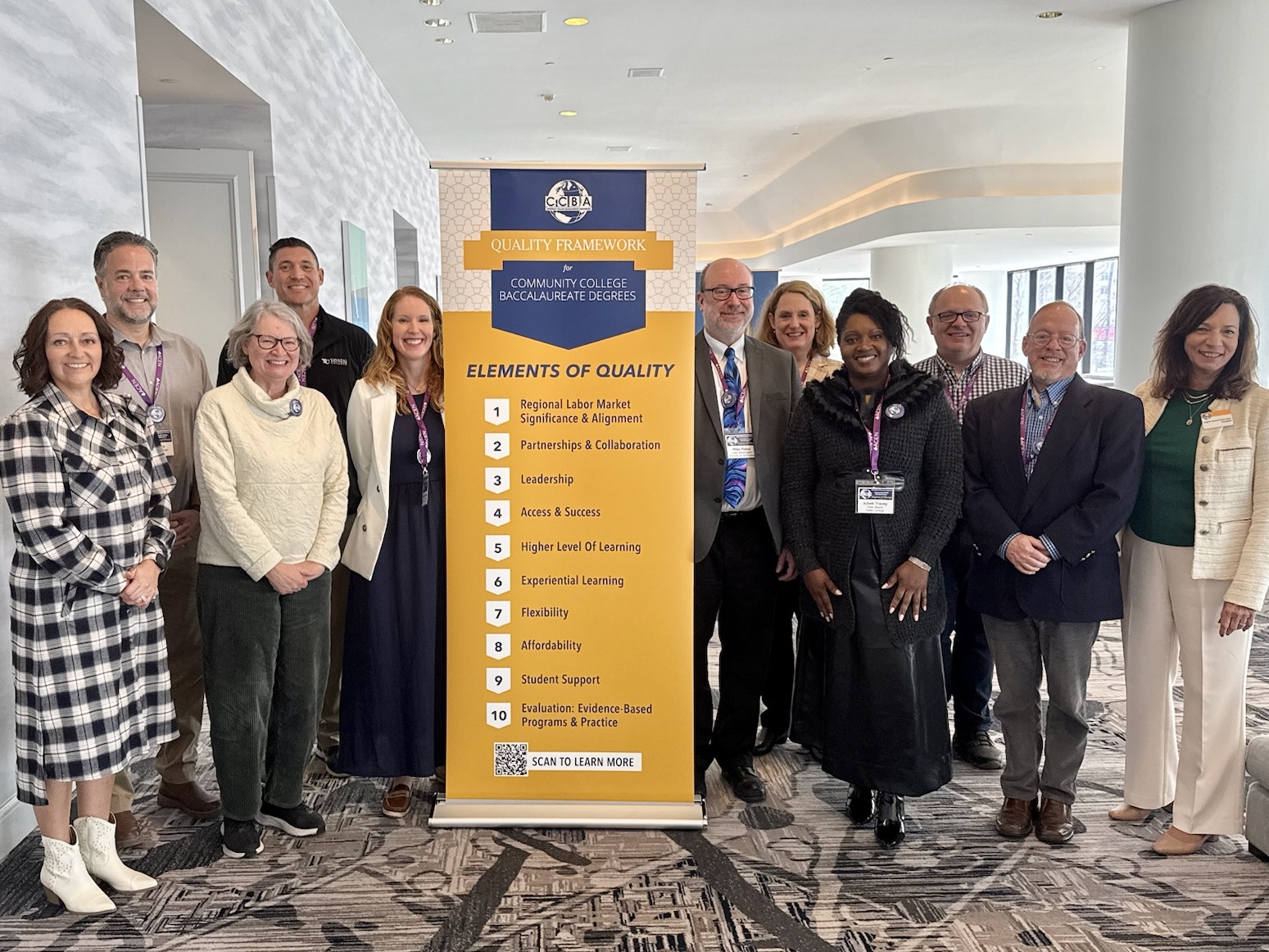
- Disseminate, promote, and provide support to community colleges and key stakeholders for the adoption of the validated Quality Framework by Spring 2027.
- Diversify CCBA funding and partnerships to ensure long-term sustainability by 2027.
- Create a succession plan by the end of 2025 that supports CCBA’s strategic goals.

STRATEGIES & TACTICS FOR ACHIEVING GOALS
Goal 1: Secure CCB Legislative Authorization and/or Expansion in Two Additional States
- Create a legislative advocacy packet to support state-level policy efforts, including consultation services.
- Identify and engage key industry partners who can advocate for CCB expansion.
- Develop donor lists to support legislative advocacy and grassroots campaigns.
- Provide consultation services for community colleges seeking legislative approval.
- Collaborate with colleges and associations to develop targeted messaging.
Goal 2: Secure CCB Legislative Authorization and/or Expansion in Two Additional States (24 to 26)
- Create a legislative advocacy packet to support state-level policy efforts, including consultation services.
- Identify and engage key industry partners who can advocate for CCB expansion.
- Develop donor lists to support legislative advocacy and grassroots campaigns.
- Provide consultation services for community colleges seeking legislative approval.
- Collaborate with colleges and associations to develop targeted messaging.
Goal 3: Diversify Funding & Partnerships for Long-Term Sustainability
- Identify potential organizations and structures that can provide operational funding.
- Explore targeted philanthropic fundraising programs.
- Monetize services to generate sustainable revenue streams.
- Explore new foundations to expand funding opportunities.
- Establish a Corporate Council to cultivate industry partnerships.
- Develop a structured Board contribution and alumni giving program.
- Expand fee-based web training on specific topics as a monetized resource.
- Adapt the business model to include consulting and licensing opportunities. Licensing?
- Increase the number of colleges that are CCBA members (need to make SMART)
- Raise membership fees beginning July 2026, potentially scaling them by institution size or number of CCBs offered.
Goal 4: Create a Succession Plan that Supports CCBA’s Strategic Goals
- Ensure that policies and procedures are in place for high-functioning organizations.
- Seek outside resources for the development of a succession plan if the board deems it necessary.
- Create job descriptions of significant roles, including qualifications, desired skills, experience, etc.
- Create a draft leadership succession plan to be shared with the Board during Fall 2025.
- The board will call an executive session to review and provide feedback.
Goal 5: Disseminate, promote, and provide support to community colleges and key stakeholders for the adoption of the validated Quality Framework by Spring 2027.
- Provide professional development opportunities, webinars, and resources tailored to community colleges’ needs for effective implementation of the Quality Framework.
- Provide professional development opportunities, workshops, and resources tailored to community colleges’ needs for effectively implementing the Quality Framework.
- Collaborate with state higher education agencies, accreditation organizations, and industry partners to align incentives and recognition for program quality improvement.
- Monitor and assess the adoption and impact of the Quality Framework within community colleges, using feedback to refine strategies and provide ongoing support.
- Disseminate tailored toolkits, best practices, and case studies specific to community colleges expanding baccalaureate offerings.
- Create a value-added designation for community colleges that have utilized the Quality framework and can document improvements in student outcomes.
- Position the Quality Framework and related guidance as one of the services offered by CCBA.
- Showcase successful implementations and outcomes of community colleges adopting the Quality Framework to motivate broader participation and buy-in.
- Launch targeted email campaigns, webinars, and social media outreach highlighting how the Quality Framework enhances baccalaureate program quality and student success.
Goal 6: Strengthen CCBA’s National Leadership & Visibility
- Initiate a Membership Drive Plan to increase membership.
- Optimize social media presence, particularly on LinkedIn, to elevate CCBA’s national visibility.
- Encourage integrated writing efforts to ensure CCBA’s perspectives are included in key publications.
- Embed CCBA information and resources into premier leadership programs.
- Strengthen connections with trustee associations and state organizations to expand influence.
- Promote the LinkedIn profiles of past and present board members to increase visibility and engagement.
- Partner with ACCT (Association of Community College Trustees) to publish articles and insights.
- The President will serve as an AACC Board Member.
- CCBA will participate in designated higher education organizations, and the President will attend at least two professional higher education association events.
- Publish CCBA’s awards and recognition programs for exemplary programs, faculty, and partners, elevating CCBA’s profile and incentivizing quality.